 Uneven
“…I literally make $0 and then there are other months where I can earn $30K+. Because of this, I have zero confidence in what I can ‘afford’ and what to budget.”
r/personalfinance, 2025
Uneven income in. The same paycheck out.
For freelancers and anyone paid in lumps. Log what lands. Uneven tells you what to set aside for tax, what to pay yourself on the 1st and 15th, and the date your money lasts until.
Most budget apps start by asking your monthly income.
You don't have one. So the plan breaks the first uneven month, and a good month goes to patching the last bad one.
“Most budgeting tools I’ve tried assume you get the same amount of money every month, and that’s just not my reality.”
r/povertyfinance, 2025
“Good month comes in and it just disappears into whatever we fell behind on the month before.”
A line cook paid in tips. r/budget, 2026
“I HATED not knowing what would be on each paycheck.”
A commission job. r/budget, 2026
From public Reddit threads. These people are talking about the problem, not about Uneven.
How it works.
Money lands. The date moves.
Type who paid and how much. Uneven splits it into tax and buffer. You get a date, not a balance.
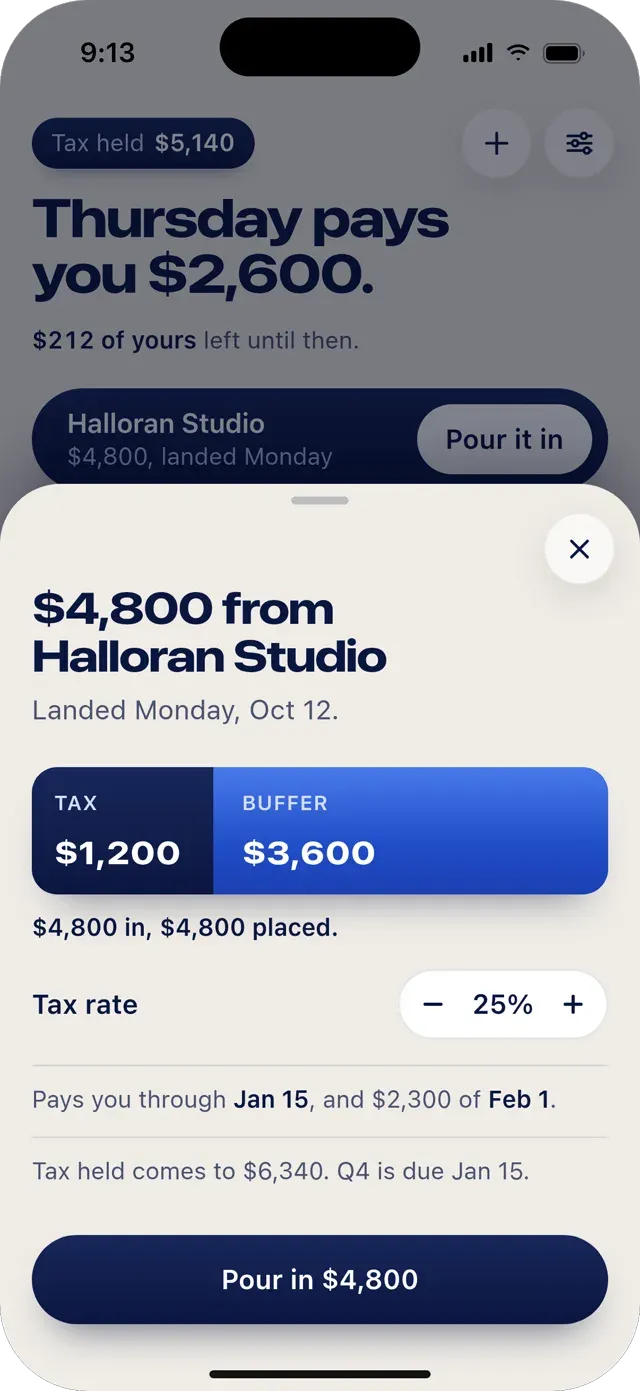
Payday is the same every time.
Bills come out first, spread across both paychecks. What's left is yours, with a daily number so it lasts.
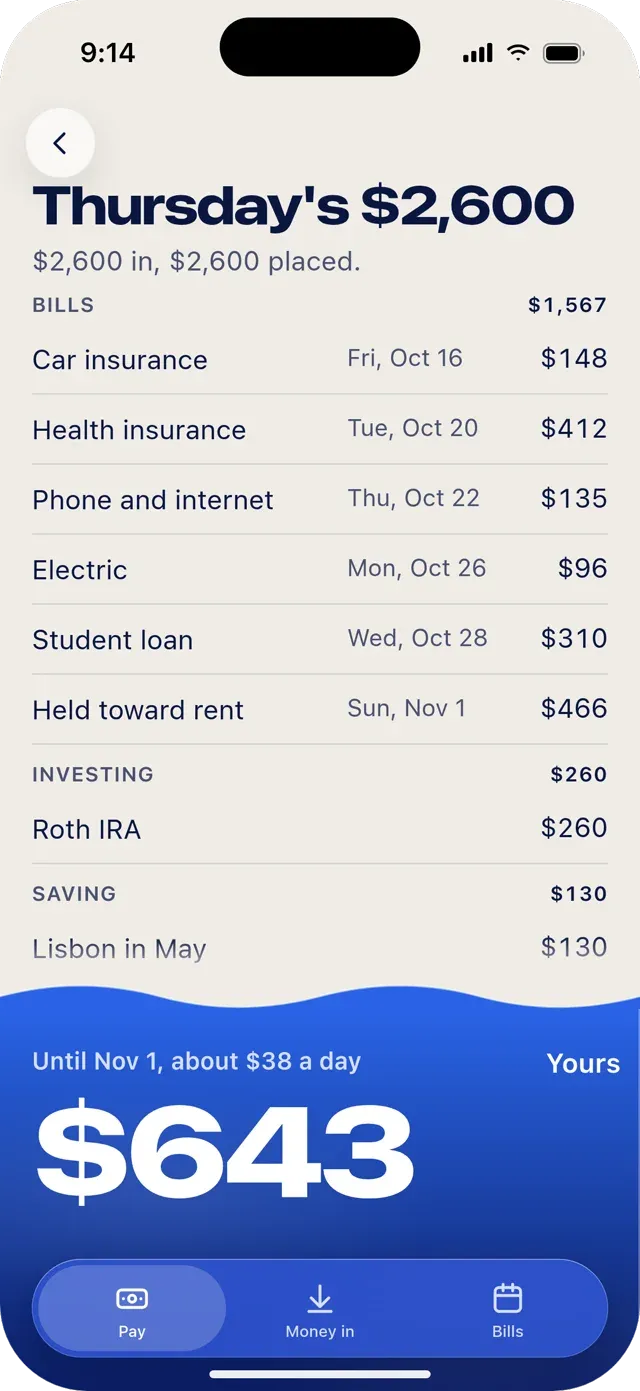
A slow month shows up early.
When two paydays are left, it says so and offers one option. You see it weeks ahead, not at the ATM.
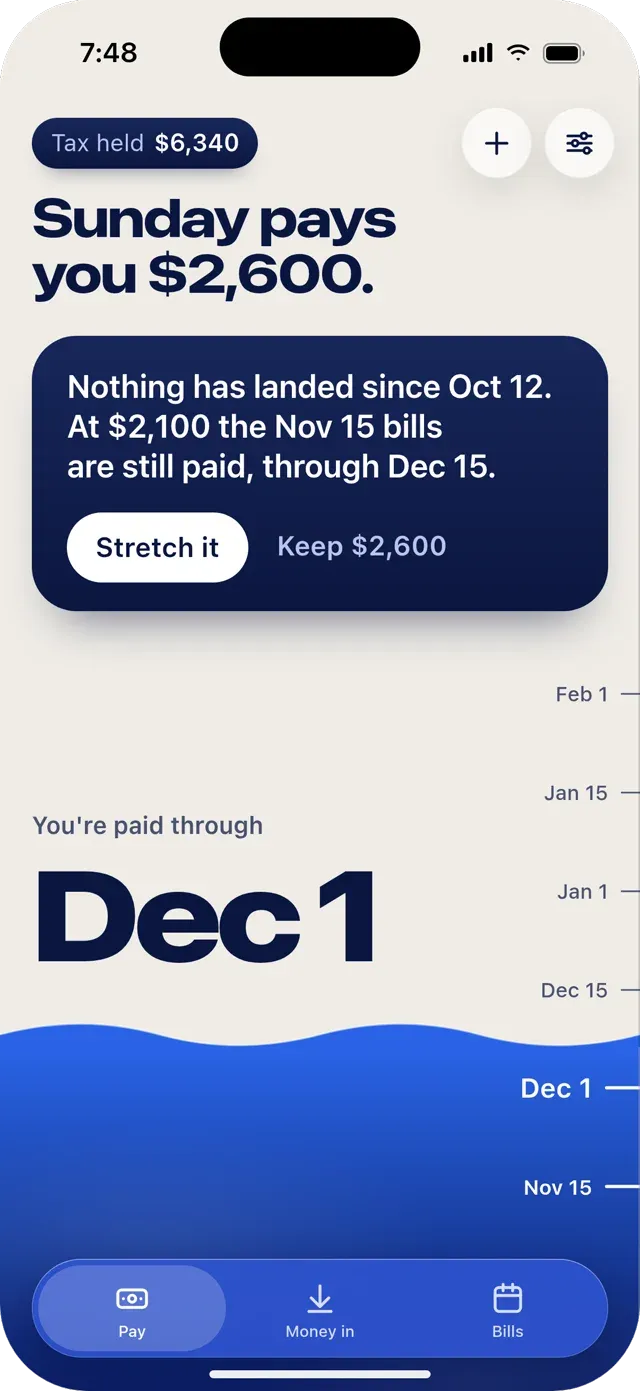
People already do this by hand.
“All the money from my work goes into my business account, and I write myself a check for our personal account on the 1st of each month that’s always the same, just like a salary. This is the trick to making a variable income feel like a stable one.”
A freelancer on Hacker News, 2014
Built for the lumpy parts.
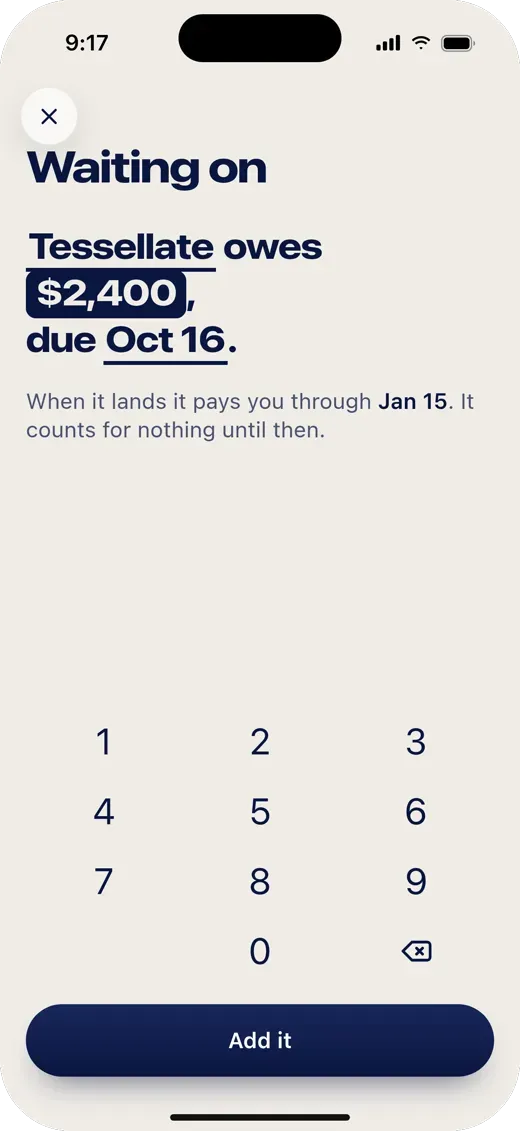
Waiting on a client? Put it on the list.
Add what you're owed and when it's due. It counts for nothing until it lands. Then one tap pours it in, and you see the date it gets you to.
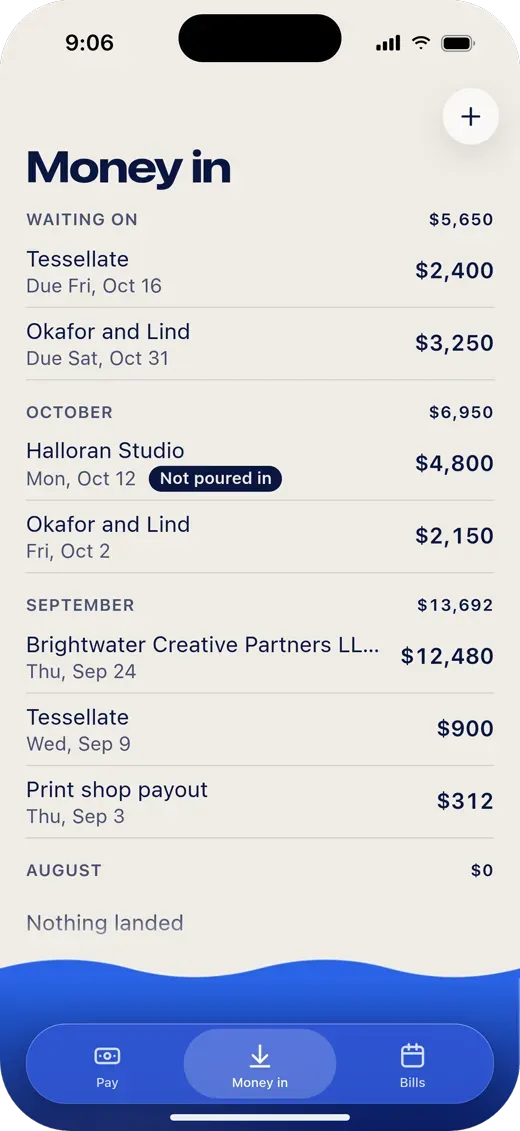
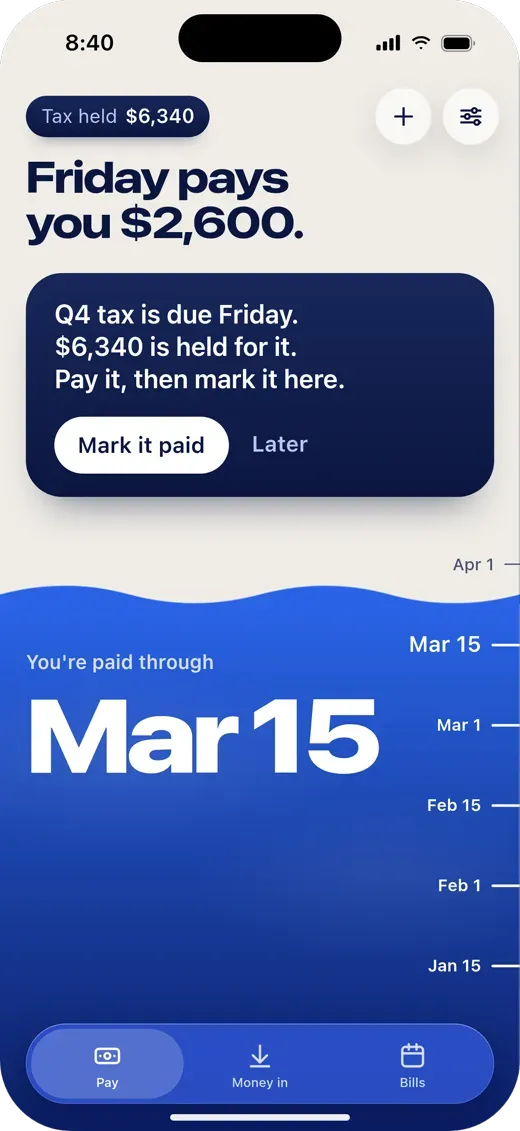
Tax is already there when it's due.
Uneven takes tax off the top of every payment, at a rate you set. When a quarter comes due, you know the amount, and it's held.
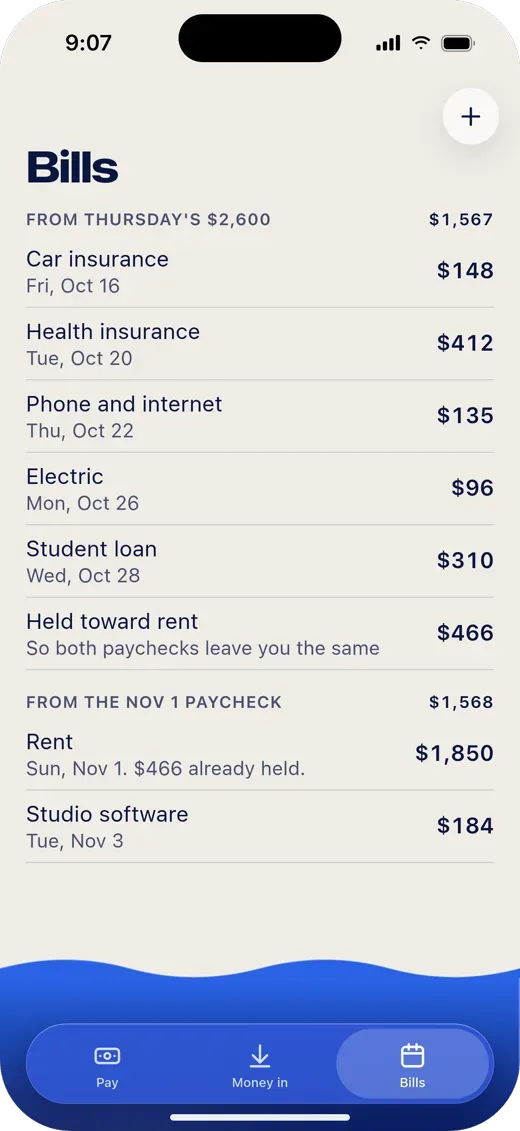
Rent doesn't wreck the first half of the month.
Uneven holds part of a big bill from the earlier paycheck. Both paydays leave you the same amount to spend.
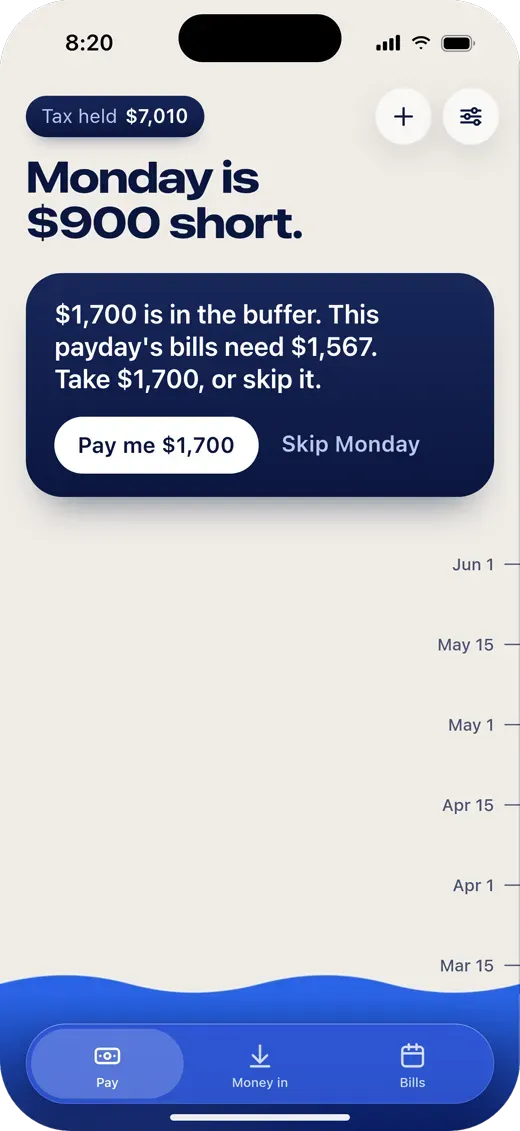
A short payday, said plainly.
If the buffer can't cover a full paycheck, you hear it before payday, with the numbers and two choices. No red, and no lecture.
And the rest.
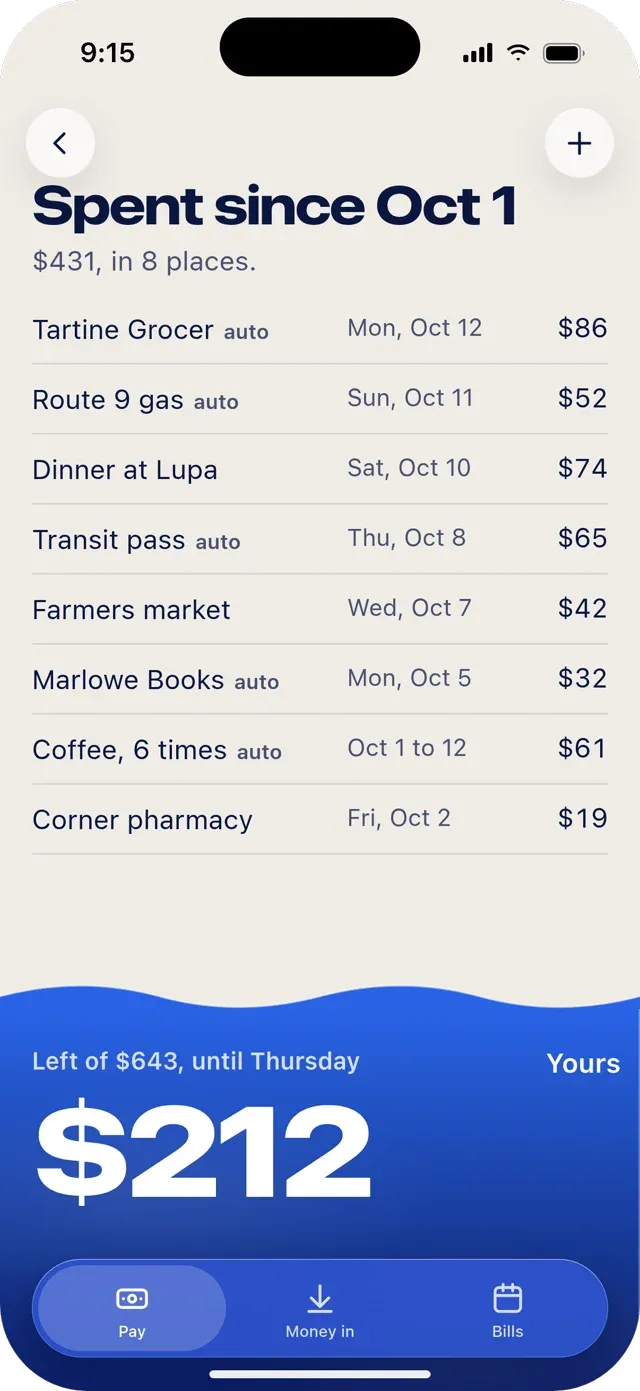
Spending money is one number.
No categories to sort. Apple Pay purchases log themselves.
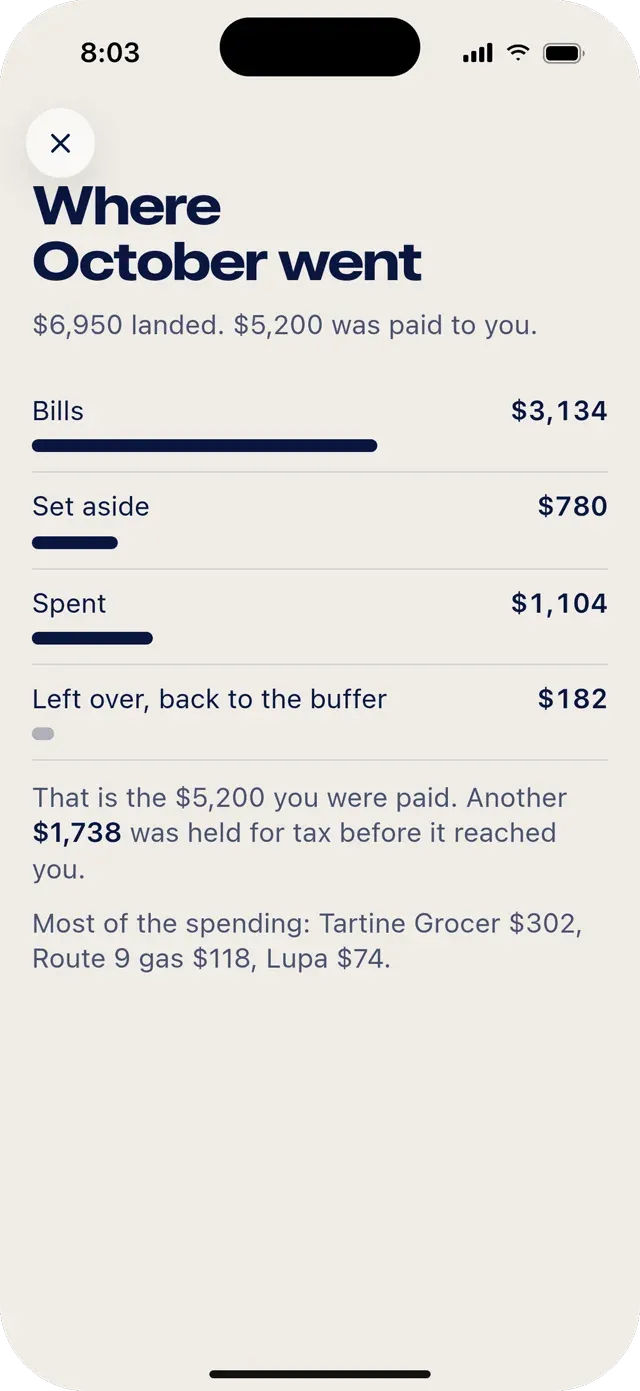
Where the month went.
Bills, set aside, spent, left over. One screen.
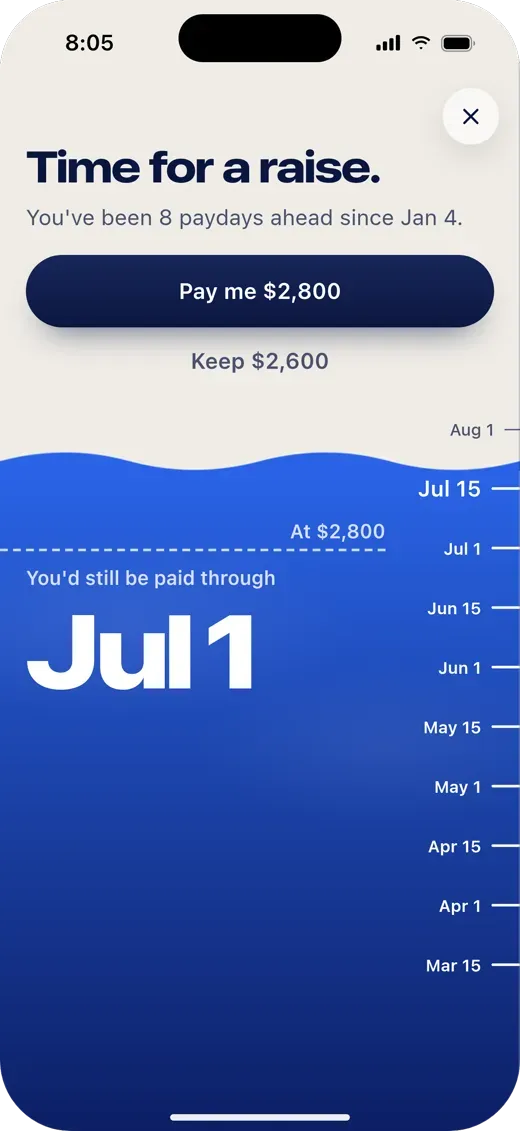
A raise when you're ahead.
Stay ahead long enough and Uneven offers to pay you more.
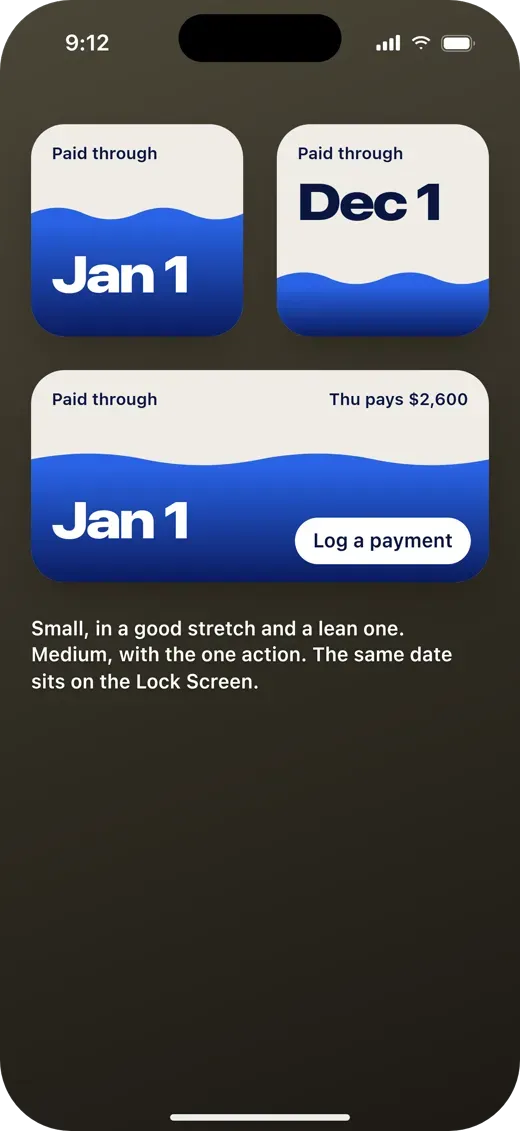
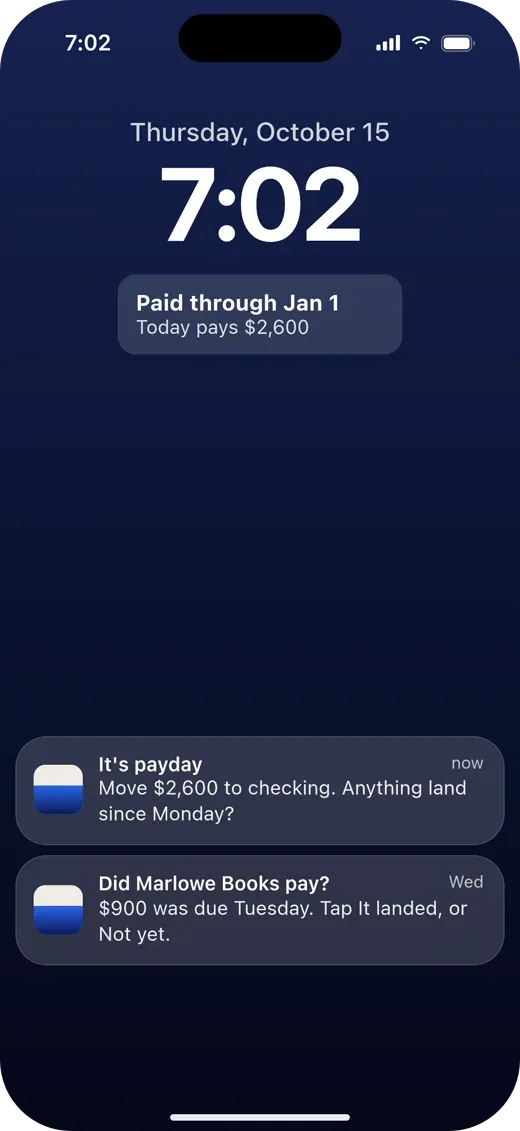
The date on your Home Screen.
Widgets show how far you're paid, without opening the app.
It pings you when money moves.
Payday, and a nudge when an expected payment is due. No streaks.
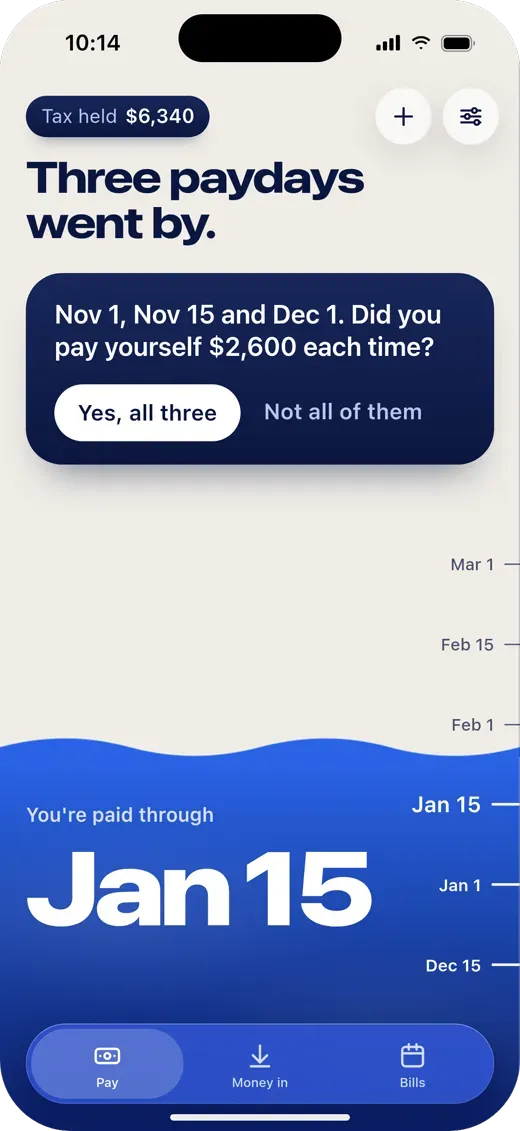
Gone a month? One question.
Uneven asks what happened while you were away, then catches up.
Built for how you're paid.
Freelancers and contractors.
Three invoices land in one week, then nothing for five.
Commission and real estate.
A big close in March has to carry a slow February.
Paid a few times a year.
One large check, and a long wait for the next one.
Seasonal and solo businesses.
The busy season pays for the quiet one.
One plan.
$59.99a year
About $5 a month. The first 30 days are free.
Start 30 days freeBilled to your Apple account after the free days. Cancel any time in your iPhone settings. Terms
Everything is included.
- The same paycheck on the 1st and 15th
- Tax set aside from every payment
- Bills spread across both paychecks
- Spending tracked as one number
- Where each month went
The plain version.
You log payments yourself.
Uneven doesn't connect to your bank. A payment takes three fields. An expected one takes a tap.
It doesn't move your money.
It tells you what to move and when. You'll want a savings account you don't spend from.
Your numbers stay on your phone.
No account. It syncs through your own iCloud.
You can do this with a spreadsheet.
Many people do. This is for people who stopped keeping the spreadsheet.
iPhone only, United States first.
Paydays are the 1st and 15th. The tax dates are US estimated-tax dates.
It isn't financial advice.
It's a method and a calculator. You make the calls.
Questions.
Is this a budgeting app?
Yes. It's a budget for income that changes. It starts from what you can safely pay yourself, takes bills and savings out first, and tracks your spending money as one number. You don't sort purchases into categories.
Does this method work?
It's the method people with uneven income already use by hand: put what lands in a holding account and pay yourself a fixed amount from it. It works while your income covers your pay across the year. It can't turn a short year into a long one, and it will show you that early.
What if I have no buffer yet?
It starts wherever you are. It opens empty and shows the level as it grows.
Is there a free version?
No. The first 30 days are free, and you see the price before you start. After that it's $59.99 a year or $9.99 a month.
How do I cancel?
In your iPhone settings, under your Apple account, then Subscriptions. Cancel during the free days and you pay nothing.
I already use YNAB. Why this?
If YNAB works for you, keep it. Uneven is for people who know the method and still ask, in a good month, how much of this is really mine.